tirsdag 10. februar 2015

Global challenges
“In your course you have studied global challenges through English-language literature and films. Write a text in which you reflect on how effective a literary text and a film have been in raising your awareness about one or two global challenges. Use examples from each work.”

We learn every day, at school or at work. However, there is other ways to learn, for example to read a book or watch a movie. As we grow, our knowledge about the world grows too. The famous philosopher Francis Bacon said, “Knowledge is power”, and that is very correct. Think about all the things we can do and everything we can change, if we have much knowledge. I have always been intrigued by the different global challenges, and I think it is fascinating when you read a book, a text or watch a movie, etc. where there is a conflict about global challenges.

There is many types of global challenges, like the nature, and the resources in the nature are being used, or how humans are being treated. These two are the ones I have been noticing lately, and I remembered a movie I watched six years ago, called Avatar, and I watched it again only to realise how much I did not understand the first time I saw it. This movie really opened my mind.
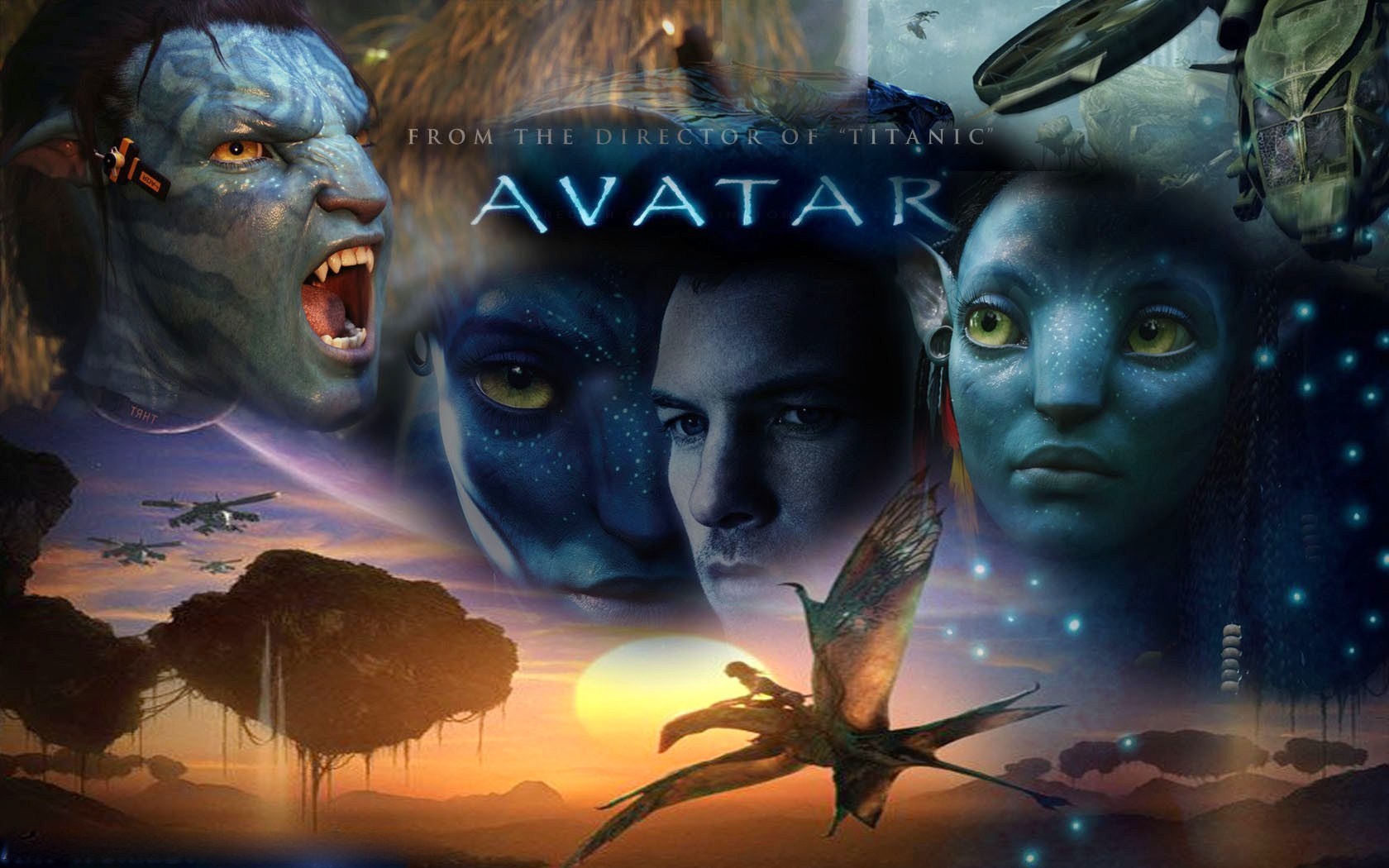
Avatar is a sci-fi/action movie from 2009, directed by James Cameron. James Cameron takes us on a journey to another planet called Pandora. The humans has set out to explore the planet and there they found resources they could take back to earth. The problem was that to get the unobtanium, which is a type of mineral, they had to go through the native people, the Na’vi. The humans, wants to exploit their resources and if they did not get it by cooperation, they would take it by force. This movie also has a sub message about finding ourselves and find out what we are willing to fight for and what we call home. The main character in the movie, Jake Sully finds himself protecting the native people because he sees that taking their resources, and leaving them with nothing, is inhuman.

Even though the action happens on a different planet, the same is happening on our planet. Cameron took a serious theme and made it into a thrilling movie. Anyhow, forcing humans away from their homes, only to take advantages of natural resources, happens here on earth. There has been many occasions where the “white man” takes over the land of native people, only to build more plants or to recover natural resources.
When I saw this movie, and other movies, about global challenges and how important the nature is, I started to realise how many places this is happening.

Another global challenge is shown in the text Robert and the Dog by Ken Saro-Wiwa, where Robert helps at a hospital and gets a new boss. The boss brings along his wife as the story goes on, and she has a dog whose name is Bingo, and Robert noticed how well the wife treated the dog. This was unnatural to him, the dogs where he is from is not well fed or does not get much attention. This dog on the other hand, was very well fed and was given much love. Robert, who is a good man, only wants the best for his wife and their six children. He has an inner conflict with himself because of the dog. One day, his boss and the boss’s wife is going on a trip, so they ask Robert to take care of Bingo. Robert, as the fine man he is, says of course yes, this gives him the perfect opportunity to handle the dog. The two first days he feeds the dog but then he decides that he would rather feed his children then the dog, so he takes the food, who was meant to the dog, and gives it to the children. The story ends with four words that goes like this: “then the dog died.”

At first I was I was a bit shocked and felt sorry for the dog, but then I sat things in perspective, Robert was a poor man who felt how unfair the world is. Imagine a dog being treated better than you are, that does not seem right. We should treat the animals well, but should we not treat the humans well too, is it not our right to live a good life? This text really made me think, not everyone has the same living situation as we in Norway do.


Both the movie and the text made me think. Think about what we can do and how to help. Global challenges is not easy, that is why they are called challenges. Nevertheless, we have to give our best, and fight for the good of the people. 

tirsdag 3. februar 2015

Spot check


Page 266
a) What are the three main genres of literature?

There are three genres: fiction, drama and poetry.

b)  Are fictional stories always untrue?


The word “fictional” is often used in the sense of “made-up”, and most of the stories are indeed made-up. However, the fiction stories may be partly true.

c)   What are the differences in the way fiction and drama relate to stories?


Drama is about showing the story, and fiction is more about telling the story. However, drama is usually written, so it does not become drama until it is performed.

d)  What is meant by “prose”?


“Prose” means writing that follows the pattern of ordinary speech, without regular rhythm or rhyme.

e) What is meant by “free verse”?


“Free verse” is poetry lacking regular metre or rhyme.

f)  How does literature differ from a user manual?


A manual is supposed to be as clear as possible. The priority is not to be funny, entertaining or personal. Therefore, you cannot use the same type of writing.

g)  How is interpreting literature different from interpreting a real life?


In real life, interpretation happens through the lens of each individual, but in literature, you are also viewing through the writer's lens.


Page 281
a) What are the four main types of point of view?

Third-person objective point of view, third-person limited point of view, third-person omniscient point of view and first-person point of view.

b) Explain in your own words the difference between the third-person limited and the third-person omniscient point of view.


When the author uses third-person limited point of view he or she has only limited access to the thoughts of all the characters. Like in the text “Robert and the Dog”, the author has only access to Roberts’s thoughts, and not the other characters. When the author uses third-person omniscient point of view, he or she has access to the thoughts of every characters in the book.   

c)  What is meant by a “reliable” narrator?


A reliable narrator is often an author who use third-person omniscient point of view and is someone you can rely on. The author gives you access to a lot of information and feelings.

Page 288

a) Where is Jerome at the beginning of the story, and how old was he?


At the beginning of the story Jerome was at school and he was nine years old.


b) Describe the school he attends.

It is a privat school for kids ho has a lot of money.

c) Why does he not live at home?


He does not live at home because his father travels a lot, to many different places. So he is only doing it because of his dad's job.


d) What kind of picture does Jerome have of his father?


Jerome has postcards of his father sent to him from around the world with pictures on them.


e) What difficulties does the housemaster have when telling Jerome what has happened to his father?


The housemaster thinks its difficult because he thinks its funny that a pig fell on him, and thats the reason Jerome's father is dead. He has problem keeping a straight face when telling the story.


f) What is told in the story about the father? for example, his professions. Jerome’s attitude to him, etc.?


In the story he says that he traveled a lot, and his son did not now what his father did, he thought that he was a mysterious adventure who travels to far places. then later on he thought he’s father either "ran guns" or was a member of the British Secret Service. Jerome worshiped his father.


g) What happens when Jerome tells his best friend in public school about the accident?


He probably started laughing (it dosent say in the text) and then Jerome realize what how the stories affects others.


h) Why does Jerome not want to talk to his fiancé about his father’s death?


Beacuse hes afraid she’s going to laugh, because of the embarrassing death and the love for his father had grown stronger.


Page 296
a)  What is the difference between direct and indirect characterisation?

Direct characterisation is the quickest way to establish a character. Provided that we are dealing with a reliable narrator, we believe what we are told and expect the character to behave accordingly. However, another character can describe the character. When the author use indirect characterisation, we learn about the character when he/she says something or the way they act.

b) What is required for a character to be experienced as “round”?

A round character is close to the complexity of real life. Round characters are able to changes and their motives are not always clear.

c)  Why is a “flat” character usually also static?

Because flat characters does not have the ability to develop.

d) Why can only a dynamic character experience an epiphany?

Because dynamic characters are often protagonists.

onsdag 21. januar 2015

Monday 19.01.15 and Wednesday 21.01.15

On Monday and the beginning of Wednesday we read a short story called Robert and the dog and analysed the plot and theme (page 274-277). We discussed the text about Robert and the dog, and we found out that the theme could be the difference between poor and rich or maybe jealousy. After that, we learned a bit about exposition, climax and resolution.


In the last lesson on Wednesday, we read the text A Shocking Accident by Graham Greene (1904-1991). Some of us were supposed to find irony in the text and others explained irony, sarcasm, first person point of view, third person objective point of view, third person omniscient point of view and third person limited point of view. 

onsdag 14. januar 2015

Task 3b page 159

I think that John’s method is the best, because he dedicates his life to help other people who needs it. He puts others life over his own, and that is admirable. Not everyone would do that. He is actually fighting the disability itself. What I mean about that is that when he help people, he helps the community and give people a chance to have a life. Though Jenny’s method is a good one, it is important to stand up to the things we believe in. Maybe someday they will listen to her protest. Personally, I would have done the same as John, we cannot rely on that the government will listen to us, so we have to take the matter in our own hands and help each other the best we can. 

Sources: 
Page 159, Access (14.01.15)

Where did all the money go?


I read an article called “Where did all the money go?”, and the article was about money. They explained how trading, investment and production works. The text also contained something about that the investment has decreased lately. They wrote that this led to unemployment and poverty. This might be a problem to the government because of the taxes. This problem is bigger than before.

The blame was upon previous Prime Minister in the U.K., Margaret Thatcher, and previous in the U.S., Ronald Reagan because of their faith in the free MARKET. Therefore, they removed a lot of expensive programs and regulation so nothing would be in their way for private initiative. A result to this was that many people without success became poor and the successful people became rich.

A completely new set of financial institutions entered the arena in the beginning of the 21st century. They do not make money by loaning out money. They make their profit by purchasing and marketing stocks. They use leveraging, which usually involves buying more of a benefit by using lent FUNDS. In the US, many banks across the country invested in the money MARKET and financial investment houses. This was a success.


Then the value of the houses began to fall. This was in 2007, when the profits people invested in suddenly was not so successful anymore. This led to that many had to loan money to pay back what they lost, but the thing is, no one wanted to lend them money because of the risk of not getting the money back. This was the start of the global recession. 
Sources:
http://access-socialstudies.cappelendamm.no/binfil/download.php?did=68773 (14.01.15)
Access - International English, page 169

tirsdag 13. januar 2015

Task 2 page 47

b) Discuss which of the interviewees you think made the best point. Who was the most interesting to listen to?

I think Diana had the best point. She had a hair salon and wanted to use the Internet to reach out to other people, so they could get information about the salon. She used the Internet to positiv things! She used Facebook to post events and used it as commercial. That resulted in that her business went better. 


Sources:
http://access-internationalvg2.cappelendamm.no/c952793/sammendrag/vis.html?tid=952796

Varieties of the English language

In my presentation, I said something about the English as a Lingua Franca AND then I said some general information about the EF English index report from 2014. Then I went over to the countries I choose: China, Guatemala and Italy.

Lingua franca
A lingua franca also called a bridge language, trade language, or vehicular language, is a language systematically used to make communication possible between persons not sharing a native language, in particular when it is a third language, distinct from both native languages.


A number of linguists have suggested that this is not necessarily the case. If English is your only language, you may not have had much practice in thinking about and trying to avoid the grammar, vocabulary and pronunciation that speakers of other languages may not be familiar with. If, however, you have grown up or lived in a multilingual community, or put a lot of effort into learning an additional language, you might have had more practice at monitoring and accommodating speakers of other languages and be better at ELF.

EF English Index Report
Contains 5 levels:
Very high proficiency
High proficiency
Moderate proficiency
Low proficiency
Very low proficiency
These levels says something about how good English the people in the country has. 
The purpouse of the report is to compare for example 2009 with 2014, and see how the countries has improved. 

Italy
EF EPI FIRST EDITION: 49.05
EF EPI FOURTH EDITION: 52.80
SCORE CHANGE: +3.75
27th place

Guatemala
EF EPI FIRST EDITION: 47.80
EF EPI FOURTH EDITION: 45.77
SCORE CHANGE: -2.03
51th place

China
EF EPI FIRST EDITION: 47.62
EF EPI FOURTH EDITION: 50.15
SCORE CHANGE: +2.53
37th place

The things that are characteristics about the countries is:

Italy
O- Ending
No diphthongs
No H
Rolling on the R

China
      Big in trading
      Trending up
       In 2016 they are going to reduce the weight of the English section of the college entrance exam.

Guatemala 
No eduacation
Bad English


Sources:

The EF EPI 2014 report
http://media.ef.com/__/~/media/centralefcom/epi/v4/downloads/full-reports/ef-epi-2014-english.pdf

 “Who speaks English?”
http://www.economist.com/blogs/johnson/2011/04/english?utm_source=feedburner

“The days of English as the world’s second language may (slowly) be ending”
http://www.economist.com/blogs/johnson/2011/04/english?utm_source=feedburner

http://www.englishlinguafranca.com/what-is-elf/
 All downloaded 19th of November 2014